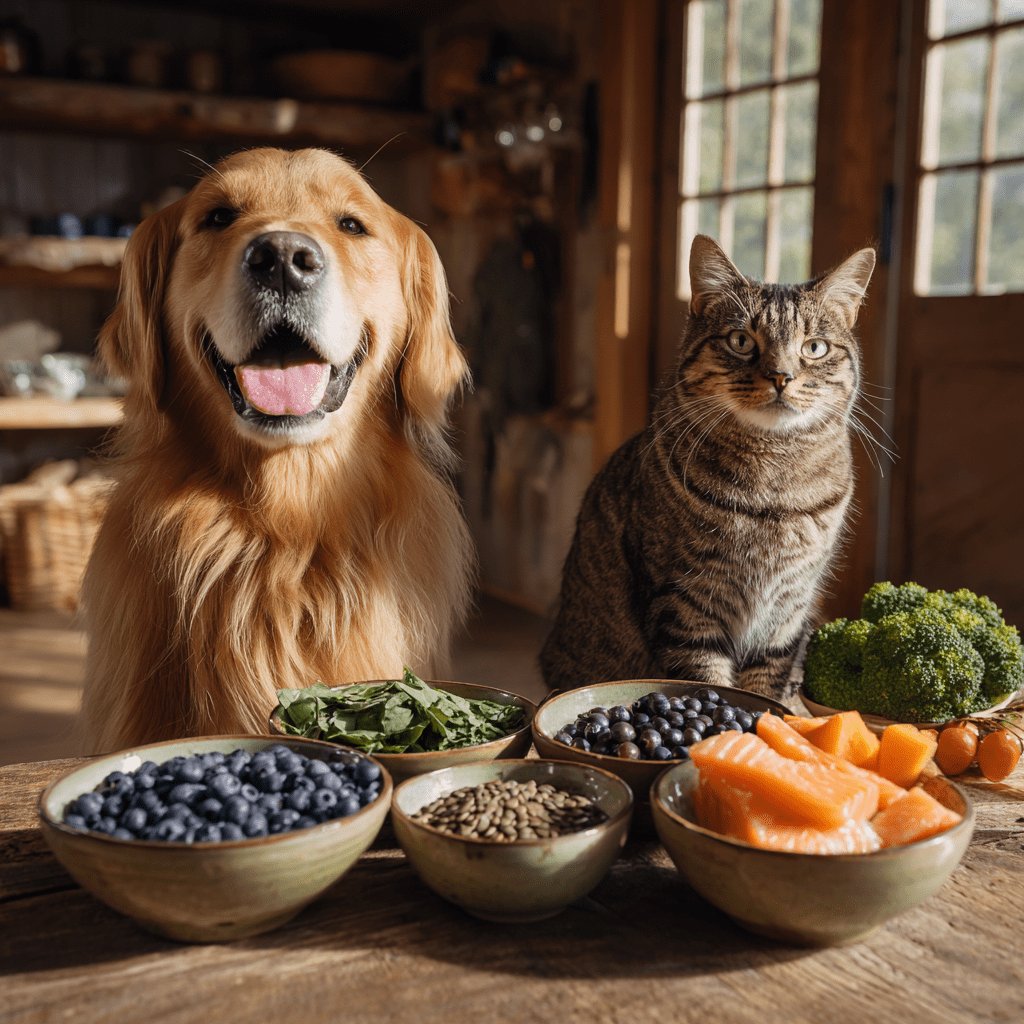
As pet owners, we want our furry friends to live long, healthy, and happy lives. While high-quality commercial pet food provides essential nutrients, adding certain superfoods to your dog’s or cat’s diet can offer extra health benefits — from improving digestion to boosting immunity and supporting heart health.
Just like humans, pets can thrive when their meals include nutrient-rich, natural ingredients. The key is knowing which foods are safe, how much to give, and how to introduce them.
In this guide, we’ll explore the top superfoods for pets, their benefits, and easy ways to add them to your pet’s meals.
What Are Superfoods for Pets?
Superfoods are nutritionally dense foods packed with vitamins, minerals, antioxidants, and other compounds that promote overall health. They’re not a replacement for balanced pet food but serve as a natural boost to your pet’s diet.
For pets, these superfoods should be:
- Safe for their species
- Natural and minimally processed
- Nutritionally beneficial in small, controlled amounts
Benefits of Superfoods for Dogs and Cats
Adding pet-safe superfoods to your pet’s diet can:
- Boost immunity through antioxidants and vitamins
- Support healthy digestion with natural fiber
- Enhance skin and coat health with omega-3 fatty acids
- Improve joint mobility with anti-inflammatory nutrients
- Increase energy through natural compounds
Top Superfoods for Pets
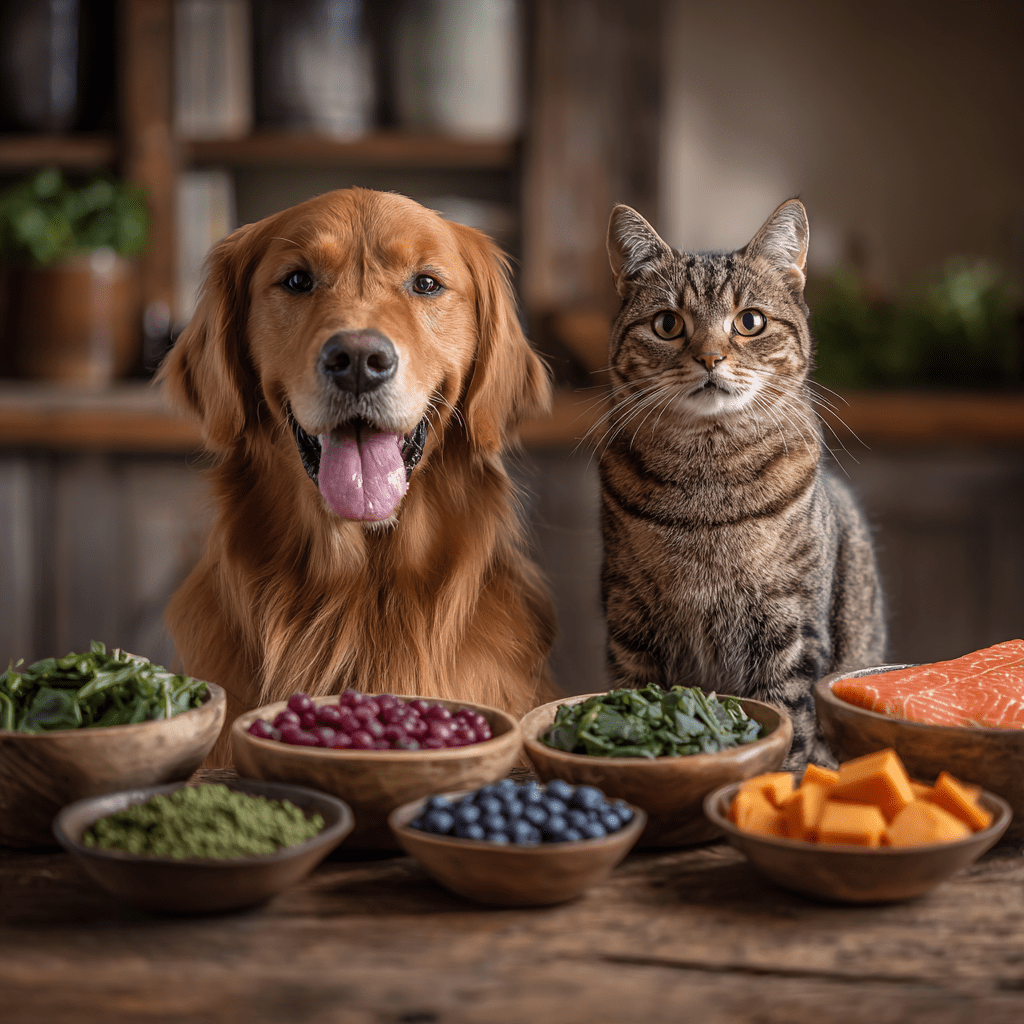
Here’s a list of vet-approved, pet-safe superfoods and their benefits:
1. Blueberries
Why they’re great: Packed with antioxidants, fiber, and vitamin C, blueberries help fight free radicals, promote brain health, and support the immune system.
How to serve:
- Fresh or frozen, 2–3 berries for small dogs or cats, up to a handful for large dogs
- Avoid processed blueberry products with added sugar
2. Pumpkin
Why it’s great: Rich in fiber, beta-carotene, and vitamins A and C, pumpkin supports digestion and helps with both constipation and diarrhea.
How to serve:
- Plain, cooked pumpkin puree (no added sugar or spices)
- 1–4 tablespoons depending on pet size
3. Salmon
Why it’s great: A top source of omega-3 fatty acids, salmon reduces inflammation, supports skin health, and improves cognitive function.
How to serve:
- Cooked (never raw), boneless salmon
- Avoid heavily seasoned fish
- Salmon oil can be used as a supplement
4. Sweet Potatoes
Why they’re great: High in fiber, vitamins A, B6, and C, and antioxidants, sweet potatoes support digestion and heart health.
How to serve:
- Cooked, mashed, or cubed without added butter or seasoning
5. Spinach
Why it’s great: Contains iron, magnesium, and antioxidants, which help boost immunity and protect cells from damage.
How to serve:
- Lightly steamed or chopped into food
- Small amounts only, especially for pets with kidney issues
6. Eggs
Why they’re great: Rich in protein, vitamins, and minerals, eggs promote muscle health and provide energy.
How to serve:
- Fully cooked scrambled or boiled eggs (no oil, butter, or seasoning)
- Half an egg for small pets, one for larger dogs
7. Chia Seeds
Why they’re great: High in omega-3 fatty acids, fiber, and protein, chia seeds help improve coat condition and digestion.
How to serve:
- Sprinkle a small amount (¼ tsp for small pets, ½ tsp for large dogs) on food
- Soak in water first for easier digestion
8. Carrots
Why they’re great: Crunchy and low in calories, carrots are a great source of beta-carotene for vision and dental health.
How to serve:
- Raw sticks for chewing (supervised) or cooked and mashed into meals
9. Kefir (Unsweetened)
Why it’s great: This probiotic-rich fermented milk supports gut health and immunity.
How to serve:
- 1 tsp for small pets, 1 tbsp for large dogs, a few times a week
- Choose lactose-free if your pet is sensitive
10. Coconut Oil
Why it’s great: Contains healthy fats that support skin, coat, and brain function.
How to serve:
- Small amounts (¼ tsp for small pets, 1 tsp for large dogs) mixed into meals
How to Introduce Superfoods to Your Pet’s Diet
- Start small – Add one new food at a time to monitor your pet’s reaction.
- Mix with regular meals – Blend into wet or dry food for better acceptance.
- Watch for allergies – Signs include itching, vomiting, or diarrhea.
- Balance is key – Too much of even a healthy food can cause issues.
Superfoods to Avoid for Pets
Not all human superfoods are safe for pets. Avoid:
- Grapes and raisins (toxic to kidneys)
- Onions and garlic (damage red blood cells)
- Avocado (contains persin, harmful in large amounts)
- Macadamia nuts (toxic to dogs)
- Chocolate (contains theobromine, toxic to pets)
Homemade Superfood Recipes for Pets
1. Blueberry & Pumpkin Dog Treats
- 1 cup oat flour
- ½ cup pumpkin puree
- ¼ cup blueberries
- Mix, roll into small balls, and bake at 350°F for 15–20 min
2. Salmon & Sweet Potato Cat Dinner
- Cooked salmon (flaked)
- Steamed sweet potato (mashed)
- A pinch of chia seeds
- Mix and serve warm
Signs Superfoods Are Helping Your Pet
When superfoods are making a difference, you may notice:
- Shinier coat
- Increased energy
- Better digestion
- Improved mood and alertness
Final Tips for Success
- Always introduce superfoods gradually
- Consult your vet before major diet changes
- Use superfoods as supplements, not replacements for complete meals
Conclusion
Superfoods can be a fun and healthy way to enhance your pet’s diet, offering an extra layer of nutrition that supports long-term health. With the right approach, you can make mealtimes more exciting and beneficial for your furry friend.
Remember: a healthy pet is a happy pet — and a happy pet means a happy owner
